
Court records in Charleston County, South Carolina, are maintained by the Clerk of Court and can be accessed through online tools, official court portals, and the clerk's office. CharlestonCourt.us can help you find publicly available court record information for Charleston County. You can also search records directly through the Charleston County Clerk of Court, the Clerk of Court's online services portal, and other government resources. The South Carolina Judicial Branch website provides additional statewide court information.
Charleston County Court System Overview
Charleston County is part of South Carolina's Ninth Judicial Circuit, which includes only Charleston County. The Circuit Court serves as the court of general jurisdiction, handling major criminal cases, civil matters, and appeals from lower courts. South Carolina's unified court system also includes a separate Family Court division and Magistrate Courts operating at the county level. The Charleston County Courthouse is located in downtown Charleston. The Clerk of Court's office manages case records for the Circuit Court and the Court of Common Pleas (civil division) and Court of General Sessions (criminal division).
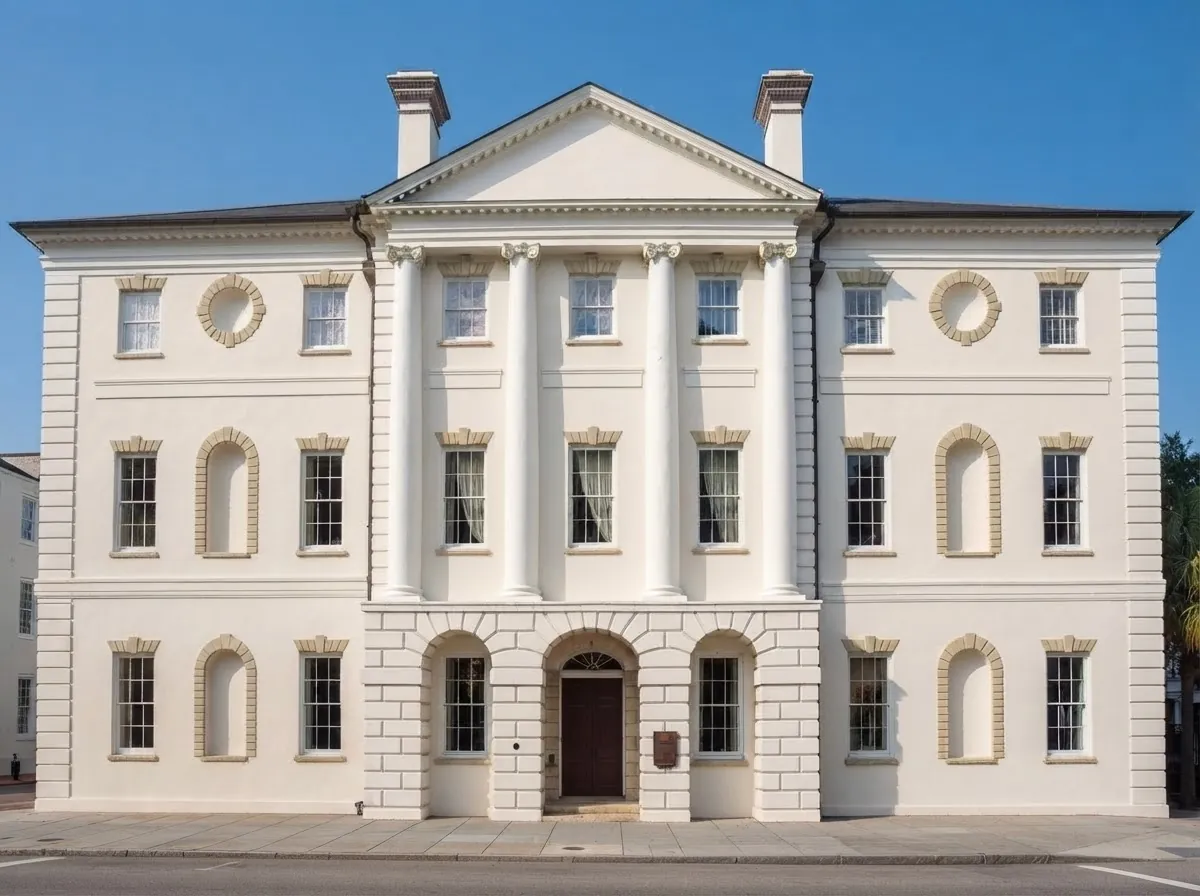
Charleston County Courthouse
Courts Serving Charleston County
| Court | Address | Phone |
|---|---|---|
| Charleston County Circuit Court (Court of General Sessions & Court of Common Pleas) | 100 Broad Street, Charleston, SC 29401 | (843) 958-5000 |
| Charleston County Family Court | 100 Broad Street, Charleston, SC 29401 | (843) 958-5000 |
| Charleston County Probate Court | 100 Broad Street, Charleston, SC 29401 | (843) 958-5160 |
| Charleston County Magistrate Courts (multiple locations throughout the county) | Various locations | (843) 958-5000 (main) |
| City of Charleston Municipal Court | 180 Lockwood Boulevard, Charleston, SC 29403 | (843) 724-7400 |
| U.S. District Court, District of South Carolina (Charleston Division) | 85 Broad Street, Charleston, SC 29401 | (843) 579-1401 |
Federal cases filed in the Charleston Division can be searched through PACER. The U.S. District Court for the District of South Carolina also provides docket and case information.
What Types of Cases Charleston County Courts Hear
Charleston County's courts handle a wide range of case types across several divisions:
- Criminal: Felonies (Court of General Sessions), misdemeanors and minor offenses (Magistrate Courts), municipal ordinance violations (Municipal Court)
- Civil: Lawsuits above $7,500 (Court of Common Pleas), civil cases up to $7,500 (Magistrate Courts), small claims
- Family: Divorce, custody, child support, adoption, paternity, termination of parental rights, domestic violence protection orders
- Probate: Decedent estates, guardianships, conservatorships, trust matters
- Juvenile: Delinquency proceedings, child abuse and neglect cases
- Traffic: Traffic violations, DUI cases
- Infractions: Minor violations handled at the magistrate level
District Court Cases in Charleston County
In South Carolina's court structure, the Circuit Court functions as the court of general jurisdiction — comparable to a district court in other states. In Charleston County, the Court of General Sessions hears felony criminal cases, while the Court of Common Pleas handles civil cases where the amount in controversy exceeds $7,500. The Circuit Court also hears appeals from Magistrate and Municipal Courts. Cases typically reach the Circuit Court through grand jury indictment (for felonies), direct filing of civil complaints, or appeal from a lower court. Circuit Court judges are elected by the South Carolina General Assembly and rotate among circuits. Cases are assigned by the chief judge for administrative purposes, and the Clerk of Court's office manages scheduling and docket information.
Magistrate Court Cases in Charleston County
Charleston County's Magistrate Courts handle criminal cases involving misdemeanors and minor offenses that carry a maximum penalty of 30 days in jail or a $500 fine (or both) under South Carolina law. Magistrate Courts also conduct preliminary hearings for felony cases before they are bound over to the Court of General Sessions. On the civil side, Magistrate Courts hear cases where the amount in controversy is $7,500 or less. Small claims cases — where the limit is also $7,500 — are filed in Magistrate Court using simplified procedures. Traffic violations, DUI arraignments, and restraining order hearings also fall under magistrate jurisdiction. Because Charleston County has a large population, multiple magistrate courthouses operate across the county to serve different geographic areas. Contact the Clerk of Court or the specific magistrate office to confirm which location handles your matter.
Family Law, Probate, and Juvenile Matters in Charleston County
Family Law
South Carolina's Family Court is a separate division of the Circuit Court with exclusive jurisdiction over divorce, custody, child support, visitation, paternity, adoption, termination of parental rights, and domestic violence protection orders. In Charleston County, Family Court cases are heard at the Charleston County Courthouse. Divorce reports can also be obtained through the South Carolina Department of Public Health.
Probate
The Charleston County Probate Court handles decedent estates, wills, guardianships, conservatorships, and trust disputes. The Probate Court operates independently from the Circuit Court and has its own judge elected by Charleston County voters. Contact the Probate Court directly at (843) 958-5160 for estate filings and related matters.
Juvenile
Juvenile delinquency cases and child abuse or neglect proceedings are heard in Family Court. Juvenile records are confidential under South Carolina law and are not available to the general public. Inquiries about juvenile proceedings should be directed to the Family Court clerk's office.
How Cases Move Through the Charleston County Court System
- Filing / Initiation: Criminal cases begin with an arrest or a warrant. Civil cases start with the filing of a complaint or petition with the Clerk of Court. Family cases are initiated by petition.
- Assignment: Cases are assigned to a judge. In Circuit Court, judges rotate through the Ninth Judicial Circuit.
- Initial Hearing: Criminal defendants appear for arraignment or bond hearing. Civil cases proceed to a scheduling conference or initial hearing.
- Pre-Trial Phase: Parties engage in discovery, file motions, and may pursue mediation or plea negotiations (in criminal cases).
- Trial or Resolution: Cases are resolved by jury or bench trial, guilty plea, settlement, default judgment, or dismissal.
- Post-Judgment: Criminal cases may involve sentencing and appeals. Civil cases may involve enforcement of judgments or appeals to the South Carolina Court of Appeals.
For self-represented litigants, the South Carolina Courts Self-Help Center offers forms, guides, and FAQs.
Court Administration, Local Rules, and Public Access in Charleston County
The Ninth Judicial Circuit's chief judge oversees court administration for Charleston County, supported by a court administrator. Local court rules and administrative orders for the circuit are published through the South Carolina Judicial Branch website.
Public access to court records is governed by the South Carolina Freedom of Information Act (Title 30) and South Carolina court rules. Most civil and criminal case records are generally public. Exceptions include juvenile records, sealed records, adoption files, and certain family court matters. You can request records in person at the Clerk of Court's office or search online through the Public Index Search tool.
Attending hearings: Most court proceedings in Charleston County are open to the public. Some hearings may be conducted remotely — check with the Clerk of Court or the online services page for current electronic hearing procedures and scheduling.
Clerk of Court Contact:
Court Records and Related Court Resources in Charleston County
- Court Case Search: Use the Public Index Search to look up Circuit Court case information by party name, case number, or date.
- Clerk of Court Online Services: The Clerk of Court's online portal provides access to case searches, court calendars, and payment options.
- Court Calendar / Day Book: The Clerk of Court Day Book lists upcoming court schedules and hearing information.
- Court Forms and Self-Help: The South Carolina Courts Self-Help Center provides downloadable forms and step-by-step guides for common case types.
- Public Records Requests: Submit requests to the Clerk of Court's office in person or by mail. Certified copies may require a fee.
- Traffic Ticket Payments: Pay traffic tickets online through South Carolina's traffic ticket payment portal.
- Inmate Search: Search current and prior inmates held at the Charleston County detention facility through the Sheriff's Office Inmate Search.
- Warrants Search: The Sheriff's Office warrants search allows you to check for active warrants in Charleston County.
- State Inmate Search: For individuals sentenced to state prison, use the South Carolina Department of Corrections inmate search or call 1-866-727-2846.
- Offender Search: The South Carolina Department of Probation, Parole and Pardon Services offers an offender lookup tool.
- Criminal Background Checks: SLED (South Carolina Law Enforcement Division) processes statewide criminal records checks and maintains the state sex offender registry.
- Legal Research: The Charleston School of Law Library is available to area legal researchers for case law and statutory research.
- Property and Land Records: The Charleston County Register of Deeds maintains real estate documents, deeds, and liens.